
How to Prepare for a Beach Volleyball Camp: A Coach's 4-Week Plan
Every camp week, I watch two kinds of players walk onto the sand. The first kind spent the month before doing nothing different — and they spend Day 1 just getting their legs under them. The second kind did a little bit of smart preparation, and they squeeze value out of every single rep from the first whistle. Same camp, same coaches, wildly different results.
So if you've signed up for one of our beach volleyball camps — or you're still deciding — here's exactly how I'd prepare in the four weeks before you arrive. None of this is complicated. All of it compounds.
 First, understand what you're preparing for
A 3-day camp with us packs in about 17 hours of training. That's more focused, coached volleyball than most adults get in six months of open play. You'll be in a group with no more than 12 players per coach (we aim for 10 or fewer), drilling, playing, and getting corrected in real time.
Here's the honest part: that volume is the whole point, and it's also the thing that catches people off guard. You're going to be moving in soft sand for hours a day, probably in the sun. The players who prepared physically get to spend their attention on skills. The players who didn't spend it on surviving.
That $599 buys you what would cost roughly 8–10 private lessons' worth of coaching time — but only if your body lets you use all of it.
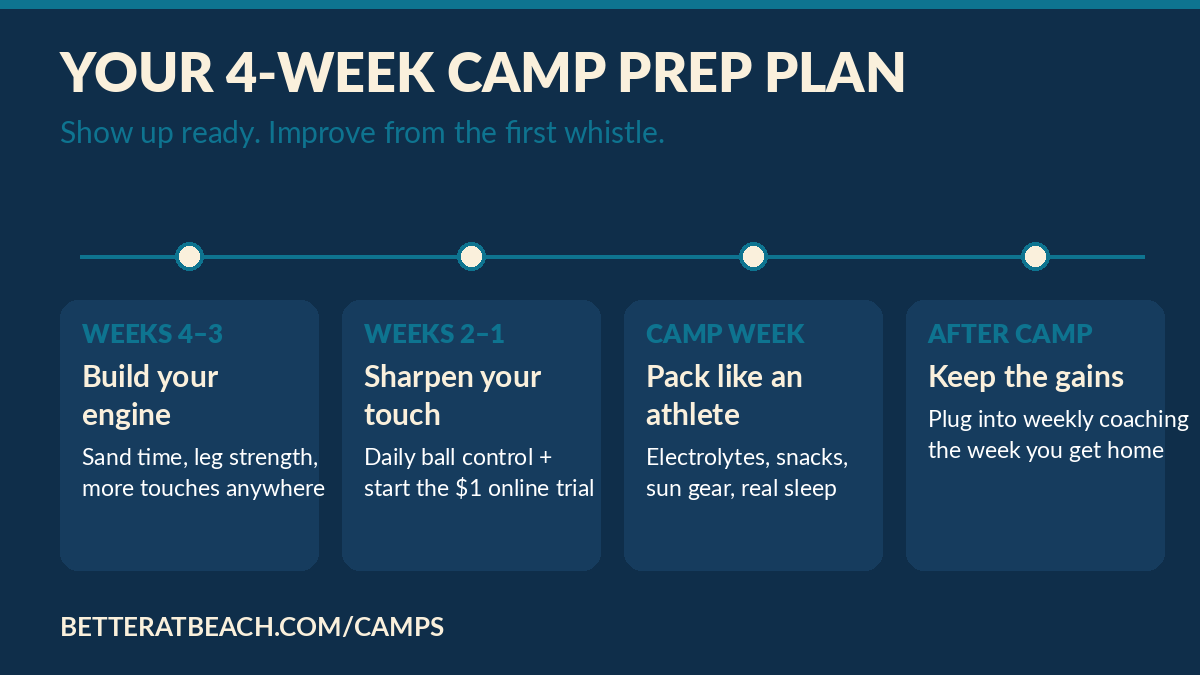
Weeks 4–3 out: build your engine
You don't need a fancy program. You need to show up able to move for multiple hours a day without your legs turning to concrete. Three things I'd do, three or four days a week:
Get on sand if you can. Even 30 minutes of easy pepper or serving on a real beach court teaches your calves and feet what's coming. Sand is a different sport for your lower body. If there's no sand near you, hill walks, lunges, and single-leg work are the next best thing.
Play more volleyball, at any level. Open gyms, grass doubles, whatever you can find. Touches are touches.
Fix your platform before you arrive. The number one thing that separates groups at camp is ball control. If your passing is reliable, every drill goes faster and you get more attacking reps. Here's the exact progression I teach beginners:
Weeks 2–1 out: sharpen your touch
Now shift from fitness to feel. Ball control work pays off faster than anything else you can do before camp, because every drill we run flows through your first contact. Ten minutes a day against a wall or with a partner is plenty:
This is also the window where I'd start training with us online if you haven't already. I'll be direct about why: the players who improve the most from camps are our members who train with us before, during, and after. They show up already knowing our terminology and our systems, so they skip the adjustment period entirely — and after camp, they have somewhere to take everything they learned instead of letting it fade. You can start with a $1 seven-day trial of our virtual training, which gets you into our live Q&As and full programs. Two weeks of that before camp is honestly the highest-leverage prep on this list.
"But what level should I sign up for?"
This is the single most common question we get — by a huge margin. Strong players agonize over it. Beginners agonize over it. So let me take the pressure off: we group players by actual skill on Day 1, and our coaches move people between groups at camp when it makes sense. You are not locked into a label you picked on a checkout page. If you want to self-assess honestly before you register, we wrote a full skill level guide for exactly this.
Pick the level that describes how you play on an average day, not your best day. When in doubt, the training is intense enough at every level that nobody has ever left bored.
Camp week: pack like an athlete, not a tourist
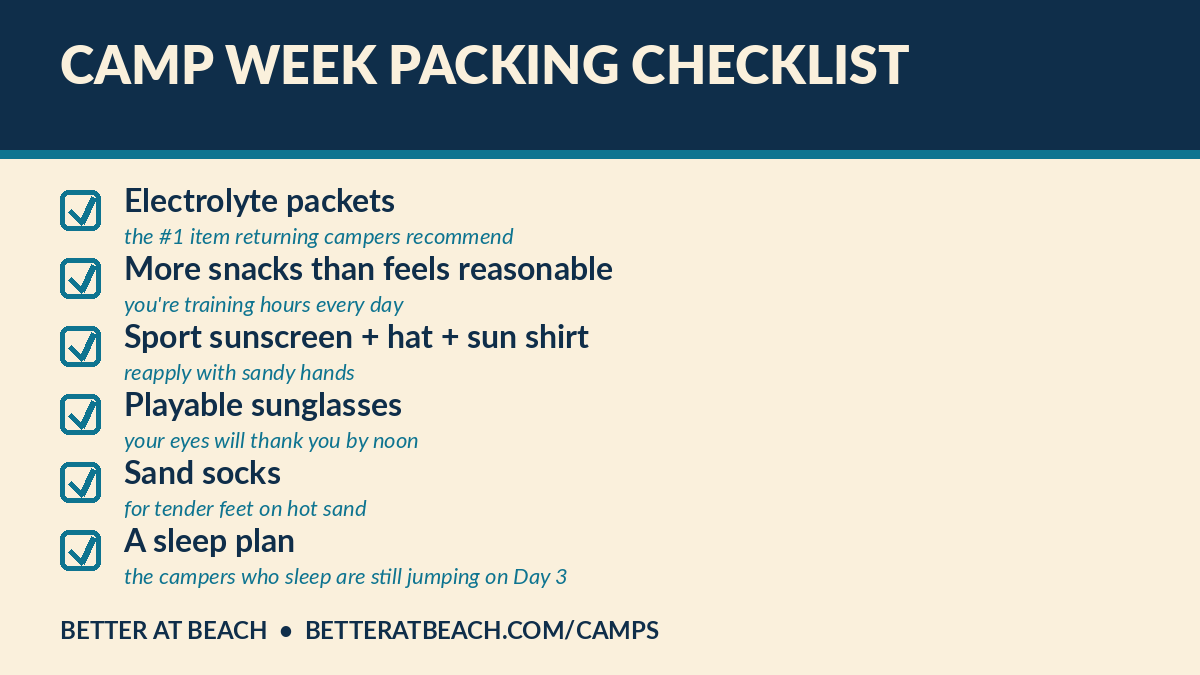
The non-negotiables I tell every camper:
Hydration is a job. You'll drink more water than you think possible. Bring electrolyte packets — they're the single most recommended item by returning campers.
Food is fuel. You're burning serious calories every day. Pack more snacks than feels reasonable: fruit, bars, nuts, whatever you'll actually eat between sessions.
Protect yourself from the sun. Sport sunscreen you can reapply with sandy hands, a hat, sunglasses you can play in, and a long-sleeve sun shirt for when your shoulders have had enough.
Recovery basics. Sand socks if your feet are tender, and plan on real sleep. The dinners and player parties are great — but the campers who sleep are the ones still jumping on Day 3.
One more thing: bring a plan for after
Here's the pattern I've seen over years of running these camps. Everyone leaves camp playing the best volleyball of their life. The ones who keep that level — and build on it — are the ones who plug into structured training the week they get home. The ones who go back to random open play lose most of it within a couple of months.
So decide before you arrive what your training looks like after you leave. If you're a member, we'll keep coaching you every week. If you want extra eyes on your game, video analysis is available as an optional add-on, where a real coach breaks down your actual film. Either way, don't let the best three days of your volleyball life become a nice memory instead of a turning point.
If you want to see what Brandon and I are about before you commit to anything, this is us:
Come ready, and camp will change how you play. Check the upcoming dates on our camps page, and if you want to arrive ahead of the curve, start your $1 trial today and train with us this week.
See you on the sand,
Mark